Every Drive. Every Plate. Every Day.

Flock Safety operates the largest automated license plate reader (ALPR) network in the United States — and it's watching you right now.

What does Flock Safety capture?

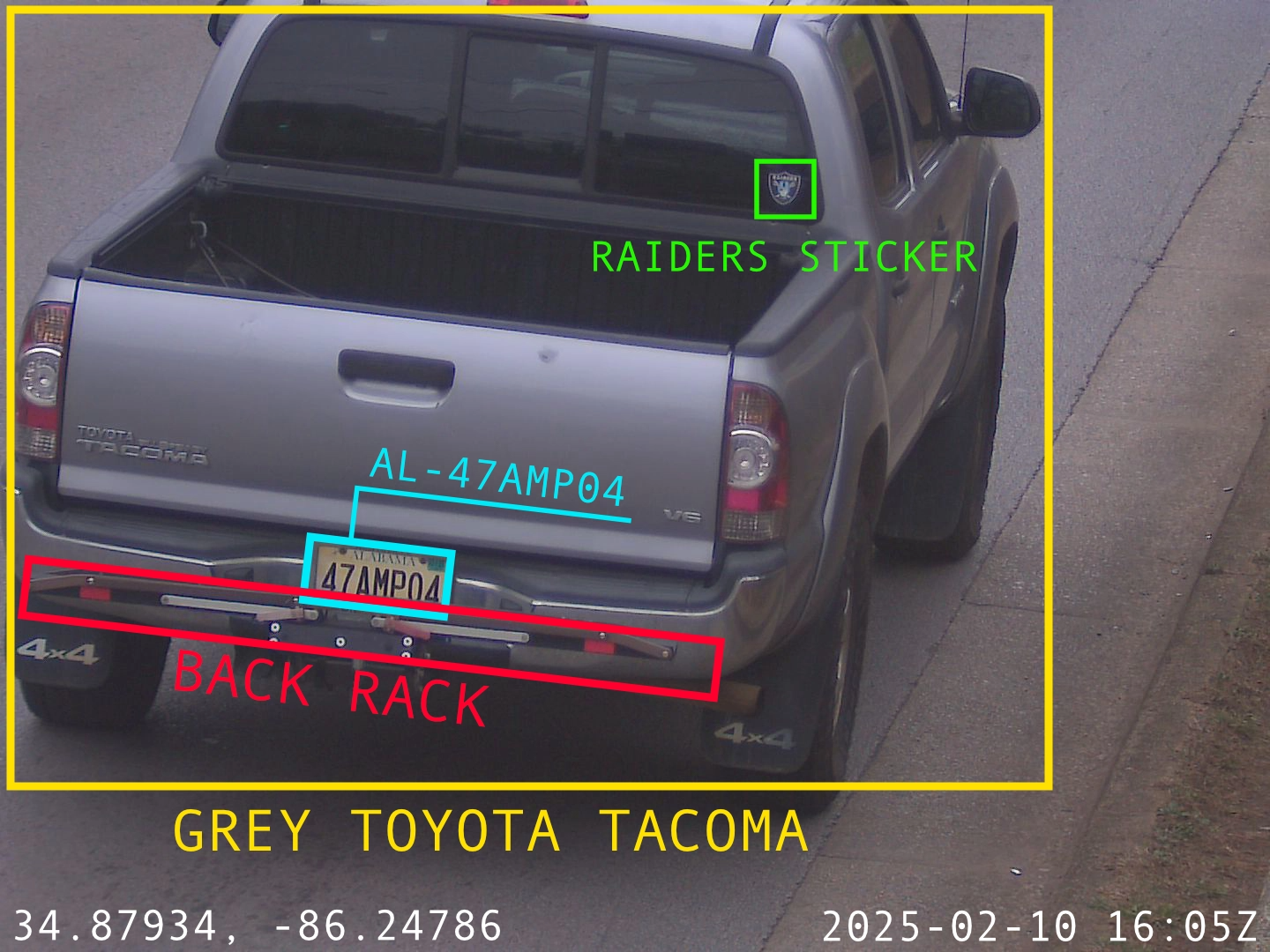
Every time you drive past a Flock camera, it captures a high-resolution photo of your vehicle, reads your license plate, and logs the exact time, date, and GPS location. But it doesn't stop there — according to Flock's own FAQ, their cameras use machine learning to extract far more than a traditional license plate reader.

  • Your license plate — read, stored, and searchable
  • Vehicle make, model, and color — classified by AI
  • Plate type — standard vs. temporary tags
  • Damage and alterations — broken taillights, aftermarket wheels, stickers
  • Resident vs. non-resident — flagged based on how often you appear
  • Time and GPS coordinates — your exact location, timestamped
  • Direction of travel — where you came from and where you're headed

This isn't speculation — this is what Flock advertises. The data is stored for 30 days or more, shared across thousands of agencies nationwide, and can be searched by any officer with access — often without a warrant.

Example of data captured by a Flock Safety ALPR camera, showing a vehicle photo with license plate, timestamp, GPS coordinates, and vehicle details

What a Flock camera captures every time you drive past.

Why should you care?

Mass surveillance without consent

Over 80,000 Flock cameras are deployed across 5,000+ cities. Your movements are tracked whether you're a suspect or not. You were never asked. You were never told.

Innocent people held at gunpoint

ALPR misreads have led to families being pulled over at gunpoint, handcuffed, and detained — because the system confused their plate with someone else's. It has happened dozens of documented times.

Officers abuse the system

Police officers have used Flock cameras to stalk ex-partners, track personal enemies, and monitor people with no law enforcement justification. Audit logs are rarely reviewed.

Data shared with ICE and federal agencies

Flock data has been accessed by Immigration and Customs Enforcement and other federal agencies, raising serious concerns for immigrant communities and sanctuary cities.

No meaningful oversight

Most cities adopt Flock cameras with little to no public debate, no privacy impact assessment, and no policy governing how the data is used, shared, or retained.

It's getting worse

Flock's newest product, NOVA, goes beyond plates — it creates a "vehicle fingerprint" that can identify your car even without reading your plate. This is where it's headed.

39 Agencies That Cut Ties
131 Articles & Evidence
16 States Represented

StopFlockSafety exists to educate and inform on the dangers of mass surveillance dragnets operated without meaningful oversight or accountability. If what you read here concerns you — good. Channel that concern into civic action: attend city council meetings, write to your representatives, file public records requests, and make your voice heard through the democratic process.

This site advocates exclusively for lawful, nonviolent civic engagement. We do not encourage or condone vandalism, threats, or violence of any kind toward law enforcement, policymakers, or property.

Agencies That Left Read the Evidence Resources & Allies

Featured Agencies

Recent Articles

Investigative Mar 19, 2026

Fort Collins and Boulder May Stop Using Flock Surveillance Cameras

KUNC ·

Fort Collins and Boulder are both considering dropping their Flock camera programs after public pushback, following Denver's decision not to renew. Boulder renegotiated its contract to allow 30-day termination without penalties. A Colorado Senate bill (SB 26-070) requiring warrants for ALPR searches older than 3 days is advancing through the legislature.

Investigative Mar 18, 2026

Flock's Replacement Has Fewer Cameras and No National Database, but Council Members Still Have Concerns

Denverite ·

Denver's $150,000 Axon contract to replace Flock advances through committee, featuring 50 cameras (half of Flock's 100), 21-day data retention, no national database, and Denver owning all data. Axon pledged to fight any subpoenas in court. Council members still expressed concerns about the fundamental concept of mass license plate surveillance regardless of vendor.

FOIA Mar 18, 2026

Docs Show Privacy, Oversight Concerns for Camera System Used by OKCPD

Oklahoma City Free Press · Brett Fieldcamp

FOIA documents reveal Oklahoma City PD has zero transparency reporting, no internal usage reporting, and no SOPs for their 90 Flock cameras. An internal memo states: 'There is no transparency reporting or internal usage reporting in our policies, SOPs, directives, training or guidance materials.' The $270,000/year contract lacks any oversight mechanisms.

Investigative Mar 18, 2026

Richmond Extends Flock Contract, Agrees to Turn Cameras Back On

East Bay Times ·

Richmond's City Council voted 4-3 to extend its Flock contract and reactivate cameras that had been off since October 2025, when police discovered federal agencies had unauthorized access. Flock agreed to a $290,000 penalty for unauthorized data disclosures and disabled the national lookup feature for all California agencies. Vehicle theft had risen 33% while cameras were off.

Investigative Mar 17, 2026

Flock Lost Its Contract with Denver, but Its Private Cameras Will Keep Running

Denverite ·

Although Denver's city contract with Flock ends March 31, private cameras leased to businesses, HOAs, and neighborhood groups will continue operating. Denver police can currently search any private Flock customer's data if the customer opts into sharing. The article highlights how private deployments create a parallel surveillance network that persists even when cities officially cut ties.

Op-Ed Mar 16, 2026

Flock 'Safety' Endangers Us All

The Daily Californian · Liza Barry

Op-ed opposing Flock expansion in Berkeley, citing the Denver false theft accusation case and California SB 34 violations. Reveals Berkeley PD's internal audit found external agencies searching their data using terms like 'ICE' and 'CBP,' potentially violating Berkeley's sanctuary city resolution. Berkeley City Council votes March 24.

View all articles →